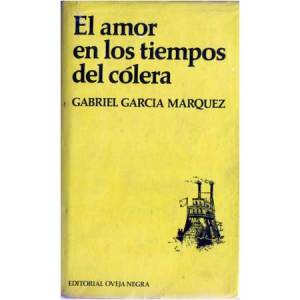
El amor en los tiempos del cólera/ Love in the times of cholera

Arte/ Art, Libros que he leído/ Books I have read, Literatura/Literature, Los días idos/ The days gone

   lib_amortcolera_ggmYo tenía quince años cuando El amor en los tiempos del cólera fue publicado por primera vez. Y esta imagen era la de la edición de bolsillo que, gracias a mi cumpleaños, pude comprar.
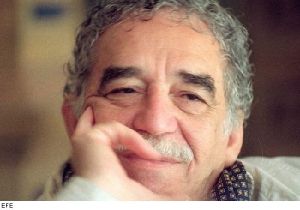
  AGG50005000 Gabriel García Márquez era ya toda una estrella; era ya Premio Nobel de Literatura. El Realismo Mágico, maravillosa forma de contar historias cotidianas, nacido en Latinoamérica con esa frondosidad, esa riqueza de lenguaje y ese colorido que sólo la selva, Los Andes, y la fuerza batiente del mar pueden dar, sembraba alegrías a los lectores, y ganaba adeptos gracias a a su prosa, a su barroquismo y su forma de explicar la vida.

   Decir que lo devoré y me devoró sería lo mismo; quince años llenos de sueños, enamorado del lenguaje como del propio amor; enloquecido por ese personaje que soporta años de espera comiendo flores como come el amor, y una mujer entera que descubre, en su propia espera, el propio sentido de su ser, su centro y, finalmente, la verdadera felicidad.

   Mucho se ha dicho de esta belleza de libro, para mí una obra maestra. Lo que yo pudiera añadir sería un grano de arena perdida en un médano, una gota de mar diluida en un océano insomne. Pero cierro los ojos, y la brisa marina de la playa, el sabor de la sal en mis labios, el sonido de las hojas al ser pasadas con las yemas de los dedos y el placer insustituible de alcanzar la fantasía entre sus tapas… Y mis quince años…
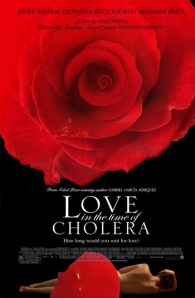
 

    el-amor-en-los-tiempos-del-colera-cartelLove in the Times of Cholera was in my hands in this edition of Editorial Oveja Negra. It was the first edition of the book and I was fifteen years old when it came out and it fell into my hands. And in my heart.

   Gabriel García Márquez, its author, was already a celebrity. He was already won the Nobel Prize and I studied his work in High School very carefully. The foundation of his writtings, Magic Realism, was born in Latin America with such power, such frondosity, so high spirit that, at that time, it was very difficult to be resisted to it.

   I devoured it, and it devoured me with the same passion. I loved it since the beguining. Lying in front of the Caribbean Sea, feeling the gentle breeze of the ocean comes through me, the silver moon sailing the eternal horizon… And this pure story of long lasting love between a man that never give up and a woman that understands, through her own life, that real love exists and it can be found in very different facets.

   I just think about this book and I have to smile; to smile to my remembrances, and my feelings at that age; feelings that still remain in me after all these years, like the love story that fills it pages.

   It is a masterpiece, a work of art. And I feel so blessed to be touched by it.
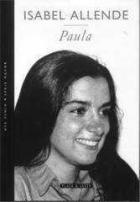
Paula

Libros que he leído/ Books I have read, Literatura/Literature

   PaulaHay libros que nacen para ser vividos y hay libros que proceden de la vida. Paula aúna estas dos características y las amplifica. Hay hechos que marcan un antes y un después en nuestras vidas y, en la trayectoria literaria de un escritor, también hay libros que se hacen hitos, palancas e incluso universos enteros que transforman su trabajo para siempre.

   Paula es un libro distinto en la carrera de su autora, Isabel Allende. No en su contenido, pues está lleno de la autora, si no en la forma; y no exactamente en la forma, si no en cómo están escritas cada una de sus líneas: una historia dentro de una historia, y miles de historias pequeñas resumidas en un punto álgido, en un eje central, que es Paula.

   Paula es la hija de Isabel Allende, pero también su punto de partida y su puerto; su totalidad y su nadir. Desde la primavera de su vida hasta el ocaso de su muerte, el libro navega ese mar insomne que es el dolor y nos presenta desnuda de toda fantasía (o llena de esa fantasía de los hechos reales) a una madre, una vida en común y un cabo que se suelta o, mejor, que se transmuta, traspasando esa frontera natural que es la carne.

   Es un libro todo corazón procedente de una mujer toda sentimiento, y leyendo sus hojas y palpando su espíritu intuimos, y finalmente sabemos que su final, su última línea, su última palabra, marca el fin de una mujer que hasta esa fecha había sido una cosa y se da cuenta que ahora no es ella misma, y por eso mismo calla.

   No hay tortura mayor para un escritor que no escribir, parafraseando a Marguerite Yourcenar. Tras Paula, Isabel Allende tuvo que encontrar de nuevo una voz, porque su voz quedó apagada en el momento en que se cerraron para siempre los ojos de su hija. Hay un antes y un después en la vida privada de la autora, pero también en su vida profesional.

   Paula es un hito de ternura, de sentimiento sobrehumano, de puro amor. 

   Y demuestra que no hay mayor imaginación, mayor amor ni mejores personajes para reencarnarlos, que la vida misma.


   alg_isabelallendeSome books are born to be lived and some of them come from life. Paula combines these two characteristics and expands them. Some facts mark our life so deep that never will dilute from our skin and, in the literary path of a writer, also exists  books that become lever, landmarks and even a whole new universes, that transform their work forever.

   Paula is so different from others Isabel Allende’s books. But just only in the suface, because all of it is fulled with the author spirit. Every word, every line, every page contains her universe of stories inside stories, but here it goes beyond  that and shows us these thousands little stories that summarized in this algid point, this central axis that is Paula.

   Paula is Isabel Allende’s daughter, but she is also her departure point and her harbor, her shore. From the spring of life until the dawn of death, the book flows sailing the ever sleepless sea that pain is and show us the naked truth of a mother, of a shared life together and of a loosen stub that goes beyond flesh to incarnate the unbeliavable, the nothing.

   It’s a heartfull book coming from a woman that is all emotion. And, reading its pages and sensing its spirit, we can visualize that its end mark the end of the author herself as she ever knew her life, and that this strange discovery leads her to lose her characteristic voice, remaining in silence since then.

   There is no greater torture for a writer than non write, paraphrasing to Marguerite Yourcenar. After Paula, Isabel Allende needed to find her own voice again, because that voice turned off the day her daugther closed her eyes forever. There is a landmark on the private life of the author, a landmark that also afected her profesional life as well.

   Paula is filled with tenderness, it’s fulled with never ending love. And it shows us that there is no better imagination than life itself.

Un guiño de Shakespeare/ A wink from Shakespeare.

Literatura/Literature, Naturaleza/ Nature

Soneto XXIX*

Cuando, en desgracia con Fortuna y con el mundo,

lloro a solas mi sola condición de paria

y al sordo cielo en vano con mis gritos hundo

y me miro y maldigo mi estrella contraria,


deseándome igual a otro de más largo

favor, con sus amigos, con su parecido;

envidiando  el arte a éste, a aquél el cargo,

con lo que más disfruto menos avenido,


ya es ésas casi odiándome, al fin por ventura

pienso en ti, y al momento mi suerte de un vuelo,

como alondra al romper del día, de la oscura

tierra se alza y canta a las puertas del cielo.


Pues tu amor recordado me aporta tal tesoro

que cambiarme con reyes tengo ya a desdoro.


Sonnet XXIX

When, in disgrace with Fortune and men’s eyes,

I all alone beweep my outcast state

and trouble deaf heaven with my bootless cries

and look upon myself and curse my fate,


wishing me like to one more rich in hope,

featured like him, like him with friend’s possessed,

desiring this man’s art and that man’s scope,

with what I must enjoy contended least,


yet in these thoughts myself almost despising,

haply I think on thee, and then my state,

like to the lark at break of day, arising

from sullen earth, syngs hymns at heaven’s gate.


For thy sweet love rememb’red such wealth brings,

that then I scorn to change my state with kings.


* Traducción de Agustín García Calvo, Editorial Anagrama, sexta edición, marzo 2002, Barcelona (España).

El Muchacho Persa/ The Persian Boy

Libros que he leído/ Books I have read, Literatura/Literature

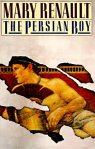
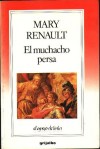
    El Muchacho Persa trajo hasta mí una de las tres figuras históricas que la Literatura, el Arte y la Historia han mantenido siempre vivas en mi memoria: Alejandro Magno.

   Con un estilo penetrante, de gran profundidad psicológica y de vívida poesía cinematográfica, el libro pasea por la vida de Bagoas, el eromenos de Alejandro, con la intensidad y el colorido y el detalle de un personaje observador, que se precia a sí mismo de estar en la periferia del centro de todo lo que le ocurre al rey macedonio.

   Del odio a lo diferente y del miedo a lo desconocido a la adoración suprema, al último amor que sin embargo es siempre el primero, el relato de Bagoas retrata la vida en la Persia de los tiempos de Darío II hasta diluirse en los rescoldos que el huracán de Alejandro dejó tras de sí: un mundo despedazado y transformado en su totalidad; un mundo que, en la Historia, jamás volvería a ser lo que era.

   Alejandro parece que tenía ese don: el de la seducción. Y debe ser cierto, pues aún hoy, más de dos milenios después, sigue hechizándonos. El discípulo de Aristóteles; el hijo delicado y recio de un par de advenedizos; el jovenzuelo juguetón, testarudo y orgulloso; el hombre que encuentra el verdadero amor desde la infancia, consiguiendo vivir, entre muchos sueños humanos, esa unión que va más allá de la carne: Alejandro y Hefastión son amigos, amantes, compañeros y, en todo, el mismo personaje; y esa llama incandescente que, de tanto brillar, acaba siendo devorada por sus propias flamas.

   Mary Renault (1905-1983), con su prosa decididamente inteligente, con su trazo firme, supo desarrollar la complejidad de unos personajes que escapan a la historia, y remendó, con el mejor de los bordados, uno de los hitos más puros, más manidos y al mismo tiempo más libres de toda la historia, regalándonos un relato alegre, vívido y decididamente romántico de una era cuyas pasiones, aún siendo en el fondo más puras, son en todo parecidas a las nuestras, y con las que nos identificamos desde la primera página hasta la última, dejándonos sedientos de más.

The Persian Boy brought to me one of the three historical figures Literature, Art and History have always maintained cheers in my memory: Alexander the Great.

   With penetrating style, great psychological depth and vivid cinematographic poetry, the book takes a walk by the life of Bagoas, the eromenos of Alexander, with the intensity and colorful and the detail of an observant character, who boasts himself to be in the periphery of the center of everything that it happens to the Macedonian King.

   From hate to the different, from fear to the stranger until the supreme adoration, the last love that nevertheless is first, the story of Bagoas portrays the life in Persia during Darius II time until being diluted in the embers that the hurricane of Alexander left behind himself: a world broken, transformed into its totality; a world that, in History, will never return to be the way it once was.

   Alexander seems had that gift: the one of seduction. And it must be certain, because still today, more than two thousands years later, he continues enchanting us. The disciple of Aristotle; the delicate and strong son of a pair of upstarts; cheerful young boy, stubborn and proud; the man who finds the true love from the childhood, obtaining to live, between many human dreams, the union that goes beyond the flesh: Alexander and Hephaistion are friends, lovers, companions and, in everything, the same man; and that incandescent flame that, of as much shining, finishes being devoured by its own flames.

   Mary Renault (1905-1983), with decidedly intelligent prose and firm outline, knew how to develop the complexity of those characters who escape History and mended, with the best embroidery, one of the purest, more rotten landmarks and freest times  in all History, giving to us a cheer and vivid and decidedly so romantic story of an era whose passions, being purer, are in all similar to ours today.

Memorias de Adriano/ Memoirs of Hadrian.

Libros que he leído/ Books I have read, Literatura/Literature

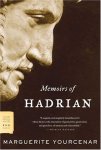
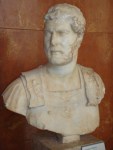
   Memorias de Adriano es uno de esos libros mágicos, fascinante desde su mismo inicio; denso y ligero; profundo y superficial; bellamente escrito y descrito, reflejando una poderosa personalidad en aras de un fin mucho más glorioso, que es el de trascenderse a sí mismo; el mismo puro espíritu del propio emperador, que nos habla desde el siglo II como si hubiese empezado ayer su relato.

   La edición que tengo, de bolsillo, lo compré a los dieciocho años (la mejor edad para enamorarse de Adriano y su historia) con un dinerillo que me regalaron por Navidad. Tiene un error que me parece fascinante, y es que uno de los capítulos del libro carece de título; algo que descubrí muchos años después, cuando me sabía de memoria párrafos enteros. Está viejito, ha sufrido los mismos avatares que sufrimos los seres humanos, y aún resiste su uso, pues lo leo al menos una vez por año. En sus hojas tiene restos de pintura (de un tenue color óxido que le va estupendamente a sus añejas hojas), pétalos de rosas secas, y alguna nota entre márgenes muy bien escondida dirigida a alguien que ya no está conmigo. 

   Es un libro vivido, porque ha encendido la chispa de su historia en otros corazones además del mío; es un libro viajado, pues ha estado en dos continentes; ido y venido conmigo, en ese vaivén de la vida que se vive. Y es mágico, porque pudo encender en mí la fascinación por el trabajo y el alma de Adriano; el ardor de su amor por Antínoo; su constancia e inconsistencia; y el hambre de conocimiento que sólo historias bien contadas llegan a sembrar en nuestro intelecto y en nuestro corazón.

   Un escritor quiere trascender en la historia; todos los seres humanos que vivimos anhelamos el mismo afán. Marguerite Yourcenar (1903-1987) lo consiguió, y no sólo por esta preciosa obra de arte, si no por su trabajo en general, trabajo del que soy un gran admirador.

       Memoirs of Hadrian is one of those magical books, fascinating since the beguining; dense and soft; deep and superficial at once; beautifully written and reflecting the pure spirit of a man beyond his era, making an Emperor talks to us from the II Century just like if it was being yesterday.

   The edition I have is a pocket one, and I bought it when I was 18 years old (the perfect age to fall in love with Hadrian and his story) and it has one mistake of edition: a lack of  title of one of the chapters. I discovered it many years later, when I knew already many paragraphs completely. It’s old; it has undergone the same ups and downs human beings have, and still it resists to use, because I read it once a year more or less. In its pages it has rest of paint (an oxide colour that match perfectly with its elderly sheets), dried roses petals, and a very well hidden note written to someone very special for me.

   It is a lived book, because it ignited the spark of its story in so many hearts besides mine; it’s a traveled book, because it has been in two continents; it has gone and come with me, in that swing of life that is lived.

   And it’s magical indeed, because it could ignite the fascination and love of Hadrian life and soul, the ardor of his love for Antinous; his certanity and inconsistency; and this hunger of knowledge that only a very good stroy can leave in our minds and hearts.

   A writer wants to extend life beyond History; all human beings want the same goal. Marguerite Yourcenar (1903-1987) did it, with this work of art but with her complete body of work, which I’m a great admirer.

Un toque de Neruda/ A touch of Neruda.

Literatura/Literature

Soneto LXVI (de Cien Sonetos de Amor)

No te quiero sino porque te quiero

y de quererte a no quererte llego

y de esperarte cuando no te espero

pasa mi corazón del frío al fuego.


Te quiero sólo porque a ti te quiero,

te odio sin fin, y odiándote te ruego,

y la medida de mi amor viajero

es no verte y amarte como un ciego.


Tal vez consumirá la luz de enero,

su rayo cruel, mi corazón entero,

robándome la llave del sosiego.


En esta historia sólo yo me muero

y moriré de amor porque te quiero,

porque te quiero, amor, a sangre y fuego.


Sonnet LXVI (from One Hundred Love Sonnets)

I do not love you except because I love you

And I go from loving to not loving you

And from waiting to not waiting for you

My heart moves from ice to fire.


I love you only because you’re the one I love,

I hate you with no end, and haiting you I pray to you,

And the measure of my ever changing love

Is, not seeing you, love you blindly.


Maybe January’s light will consume

With its cruel touch, my entire heart,

Stealing away my key to true calm.


In this entire story I am just the one who dies

And I will die of love because I love you,

I love you, Love, in blood and fire.

Una pizca de Poesía/ A piece of Poetry.

Literatura/Literature

sauce-lloronUn haiku repleto de melancolía (¿habrá alguno que no sea así?), escrito por Buson (1716-1784).

Te marchas tú;

verdes son los sauces,

largo el camino.

A haiku by Buson (1716-1784), replete of melancholy (can we know one without it?)

Old weary willows…

I thought how long the road would be

when you went away.