Arte/ Art
Himno al Amor/ Love’s Hymn.
Arte/ Art, El mar interior/ The sea inside, Música/ Music A R.M.,
Edith Piaf en una de sus más memorables canciones.
To R.M.,
Edith Piaf in one of her best songs ever.
Himno al Amor.
El cielo azul sobre nosotros se puede derrumbar,
Y la tierra desmoronarse.
Poco importa,
si tú me amas,
que el mundo entero se rompa en pedazos.
Mientras que el amor inunde mis mañanas,
mientras se estremezca mi cuerpo bajo tus manos,
poco me importan los problemas,
mi amor,
porque tú me amas.
E iré hasta el fin del mundo;
o me teñiré de rubio, si tú me lo pides.
Descolgaré la luna,
o robaré una fortuna,
si tú me lo pides.
Renegaré de mi patria,
y negaré a mis amigos,
si tú me lo pides.
Pueden incluso hacer de mí mofa;
no importa lo que sea, yo lo haré,
si tú me lo pides.
Si un día la vida te arranca de mi lado,
si mueres por estar lejos de mí;
poco me importará,
si tú me amas,
porque yo moriré a mi vez.
Tendremos para nosotros la eternidad
en el azul de toda la inmensidad.
En el cielo, ya sin problemas,
mi amor,
créeme que nos amaremos;
pues Dios reúne a los que verdaderamente se aman.
La vie en rose.
Arte/ Art, Música/ MusicDos formas diferentes de ver La vida en rosa/ Two different points of view to see La Vie en Rose.
Absurdia: Viñetas de la Calle Jasper/ Subsurdity: Vignettes from Jasper Lane.
Arte/ Art, Libros que he leído/ Books I have read, Literatura/Literature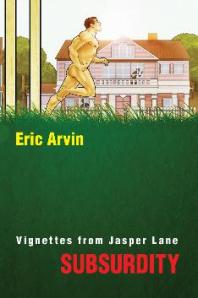 Subsurdity, que me he tomado la libertad de traducirlo a Absurdia, es el segundo libro publicado de Eric Arvin. Y contiene en su interior la belleza de lenguaje que lo caracteriza, y la rara habilidad que tiene su autor para entrelazar universos paralelos en una historia común, y que dicha historia tenga la suficiente entidad como para enganchar al lector de principio a fin.
Subsurdity es la historia de una urbanización norteamericana, limpia, aseada, de clase media acomodada; es la historia de sus vecinos, preocupados por cosas de vecinos; es la historia de relaciones falsamente superficiales; y es la historia de las miles de historias que pueblan cada una de las casas que forman un vecindario una vez cerramos las puertas a los visitantes entrometidos.
Pero, como es norma en la literatura de Eric Arvin, Subsurdity encierra historias de amor inacabadas: de amistad, de pareja y, de aquellas más profundas: las que mantenemos con nosotros mismos. Todo en el libro parece jocoso (y de hecho lo es), pues es un libro ligero que encierra, como la semilla en el interior del fruto, un tesoro sin igual. Y ese tesoro es lo que Eric Arvin maneja mejor: el secreto de ser, y de parecer, lo más fieles que podamos a nosotros mismos.
Es una historia coral llena de líneas que se cruzan. Es muy sensorial, repleta de miradas, de tactos, de olores y sabores. Todos los personajes guardan secretos, y todos salen a la luz en este vodevil de verano; es un libro lleno de poesía, la poesía escondida en las cosas diarias: ir a la compra, encender una barbacoa, enamorarnos. Y es sobre todo una historia de amor: el amor hacia nosotros, el amor hacia el Otro y el amor hacia lo diverso, hacia lo único y hacia Dios.
Es un libro divertido, jocoso, ligero, asombrosamente conmovedor y superficialmente absurdo. Es una historia que nos enfrenta a nuestras actitudes como vecinos en el mundo, que retrata con maestría y buen humor los rasgos más marcados y oscuros de los individuos; la individualidad feroz y la incomprensión hacia lo distinto; a la vez que nos enseña, en su enorme diversidad, la tolerancia que la propia vida tiene con lo creado; tolerancia que a veces, demasiado seguido quizá, ponemos en duda sin motivo alguno.
Próximamente, en este mes de agosto, sale a la luz una nueva edición de Subsurdity: Vignettes from Jasper Lane, y pronto el autor publicará su continuación, que promete ser igual de alocada, y precisa y tierna, y tan maravillosamente bien escrita, como ésta. Y ambas ediciones presentan, además, la colaboración del artista gráfico portugués HvH, que ha diseñado ambas portadas especialmente para Eric Arvin. Como ocurre con todo en la vida, también los artistas se encuentran, se reconocen y se admiran.
Subsurdity es un magnífico libro de verano, alado, fugaz, de risa fácil y de pensamiento profundo, que mira hacia la diversidad de la vida sin vergüenza alguna y con grandes dosis de optimismo.
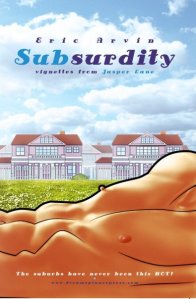 Subsurdity: Vignettes from Jasper Lane is an incredible book. It is for many reasons: first of them, it’s the second published book by author Eric Arvin. Second, it’s the most funny, clever and profound modern vodevil recently published. It’s funny, a lot, but, as Eric Arvin usually does, it has inside its lines so much profound feelings, so much rotten stories that make its reading enjoyable and interesting.
Eric Arvin’s prose is poetically marvelous. He writes with this magic cadence that makes, in Subsurdity, a perfect match with the sound of the laugh, open, free laugh. His used of the written word is pure magic; that’s why I think of him as a Sorcerer, because he enchants us from the very begining to the very end of the book, leaving us breathless for more. And more will come with the second part of the story, soon to be released.
Subsurdity is a story of a neighborhood, with neighbors looking for each other, looking to their rights and wrongs, to their gardens, to their love life and to their jogging manners. Subsurdity is a protayed of a true American neighborhood full of so many different people that being normal is the exception. And all those stories, embraced in together with a tight lace made of his writing, are made of never told secrets, unspoke fears, unfaced deceptions, and love, above all, love: for the Other and, most important of all, to ourselves.
Because Eric Arvin always writes about love, because everything is about Love. Real love: that emerges from the ordinary, the different; that grows up in the soil of lost souls; in the shadows of the outcast and different.
That’s the real secret of the funny, airless, wonderful and joyful Subsurdity: it’s a love story, no matter races, genders, explanations, craziness and unfaithful past lifes; no matter, in fact, with whom, to whom or how it happens, just that happens. And love is in the summer air of this precious little book, that soon will be released his second edition at the end of this month of August. And with this new cover by Portuguese graphic artist HvH… Both of them knowing each other, admiring each other and working together as a real artists do.
Subsurdity: Vignettes from Jasper Lane is and incredible summer book. It’s funny, tender, smart and wonderfully beautiful. And leaves us with this big smile on our face that worth every page of it.
Gitanjali.
Arte/ Art, El mar interior/ The sea inside, Literatura/Literature, Los días idos/ The days goneCanción 12.
¡Que largo es mi viaje y qué extenso es mi camino!
Salí en la carroza con el primer destello del alba y proseguí mi camino a través de los desiertos del mundo, dejando mi huella en numerosos planetas y estrellas.
El camino más largo es el que llega con mayor rapidez ante ti, y la enseñanza más complicada es la que se traduce en la sencillez de una melodía.
El viajero debe golpear en una y otra puerta extraña hasta poder llegar a la suya; y ha de marchar errante por todos los mundos externos, para alcanzar al fin su santuario más íntimo.
Mis ojos viajaron errantes durante mucho tiempo, antes de que los cerrara diciendo:»¡Aquí estás tú»
El grito que pregunta: «¿En dónde?», se funde en raudales de lágrimas e inunda al mundo con el torrente de ese: «¡Aquí estoy!»
 Song 12.
The time that my journey takes is long and the way of it long.
I came out on the chariot of the first gleam of light, and pursued my voyages through the wilderness of worlds leaving my track on many a star and planet.
It is the most distant course that comes nearest to thyself, and that training is the most intricate which leads to the utter simplicity of a tune.
The traveler has to knock at every alien door to come to his own, and one has to wander through all the outer worlds to reach the innermost shrine at the end.
My eyes strayed far and wide before I shut them and said: ‘Here art thou!’
The question and the cry ‘Oh, where?’ melt into tears of a thousand streams and deluge the world with the flood of the assurance ‘I am!’
(500) Días de Verano/ (500) Days of Summer.
Arte/ Art, El día a día/ The days we're living¿No es simplemente delicosa?/ It isn’t just deliciuos?

En el parque/ In the Park.
Arte/ Art, El día a día/ The days we're livingPaseando por Santiago de Compostela, entramos en un parque público amurallado, anteriormente el jardín de un viejo pazo abandonado, mientras la luz de la tarde entraba a raudales por los senderos restaurados a la vera del pequeño desvío del río, y el suave viento levantaba de la hierba recién cortada un sinnúmero de aromas entremezclados con la sombra de manzanos y perales, repletos de fruta colgada, y de pinos con sus agujas de terciopelo y de robles con sus ramas como abanicos.
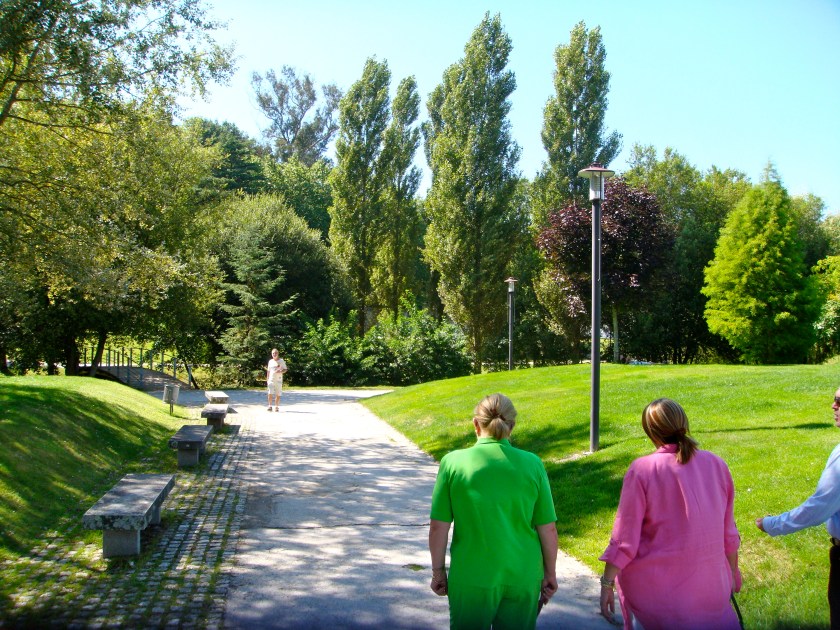
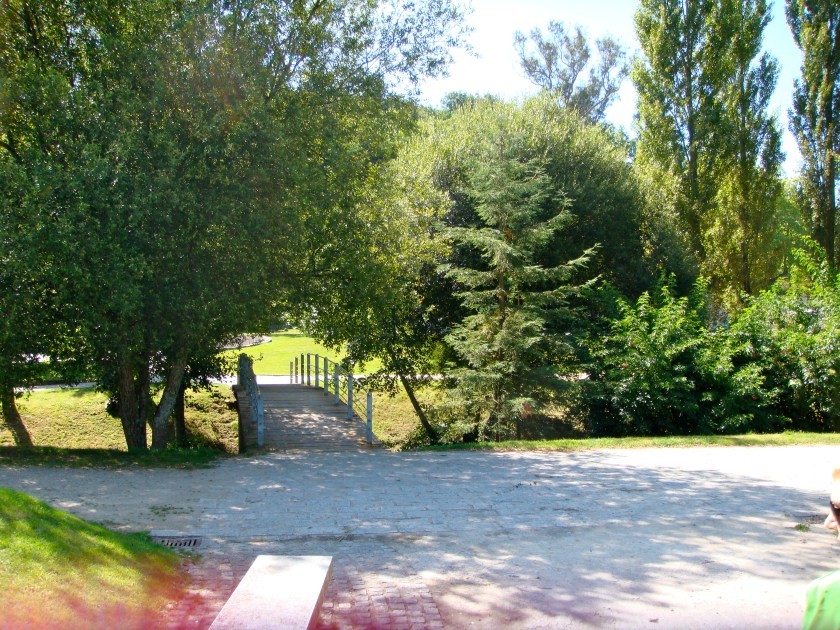
Walking into Santiago de Compostela, we came into this public park, years ago the old garden of an old and ruin palace, rebuilt and opened up. We walked through it feeling the warmth of the afternoon, the smell of the recently cut grass and the rumour of the little river across the park; felt elevated while we were inside its walls, discovering the shadows of pines, oaks, apple-tress, pear-trees and other wonderful surprises.
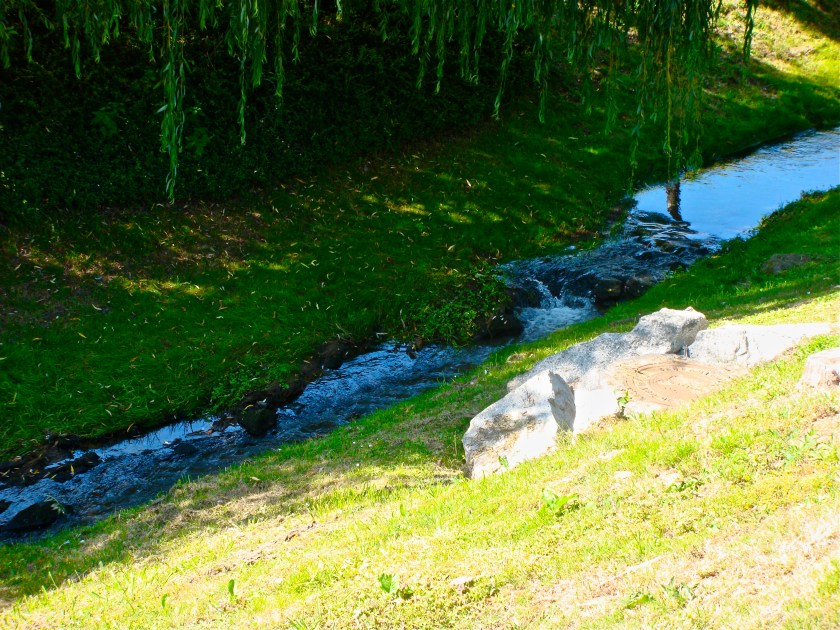
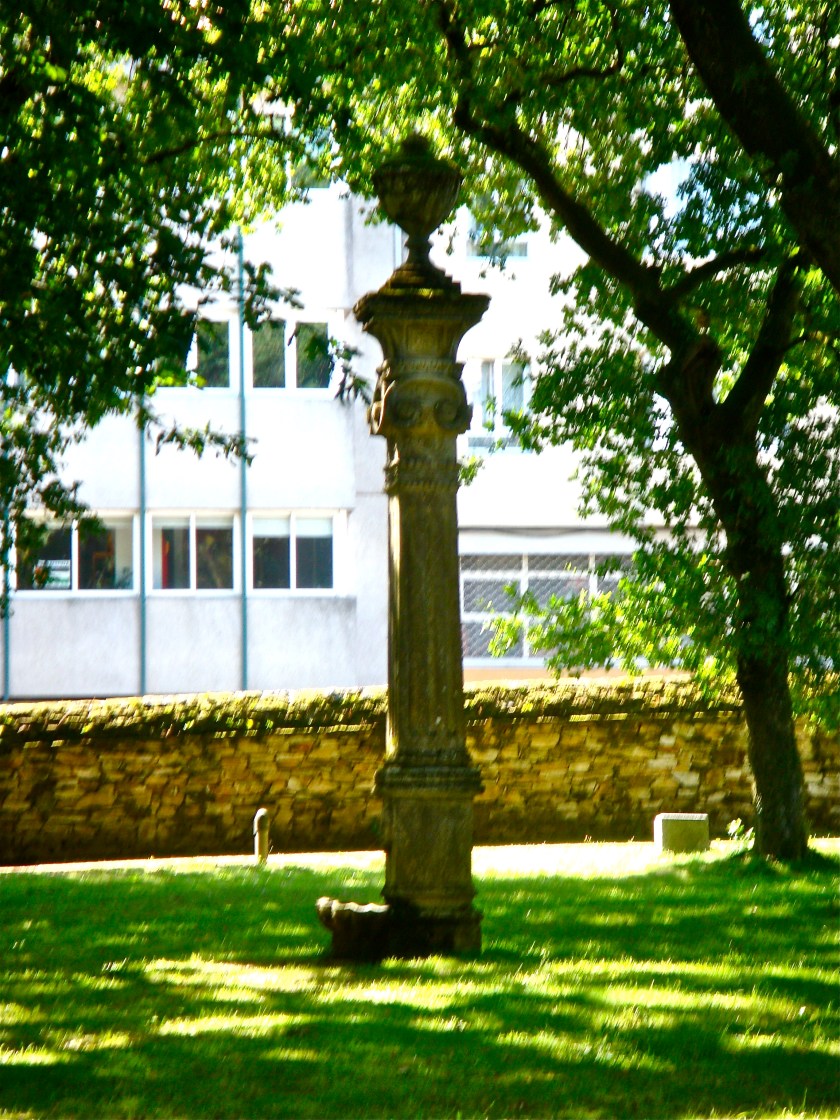
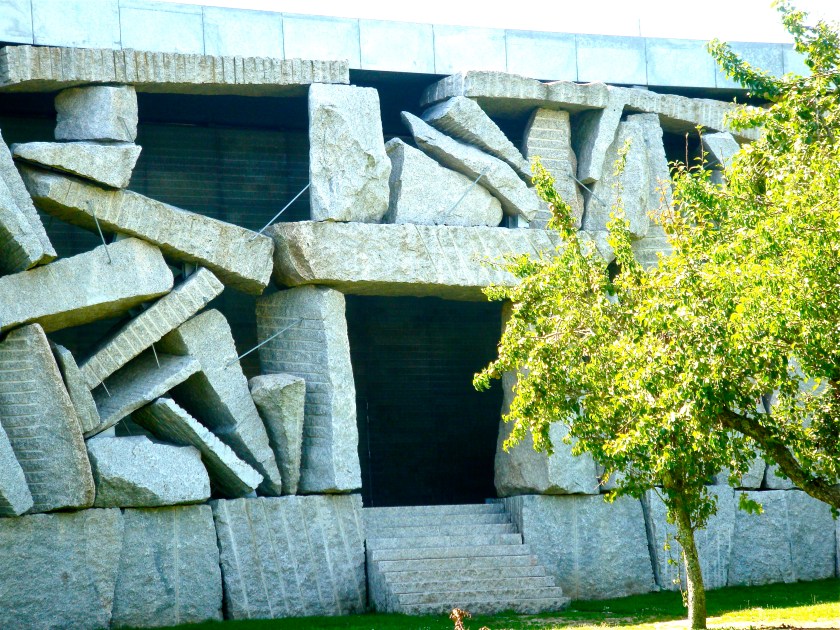
Y en medio de ese juego de sombras nos dimos cuenta, con especial agrado, que este sencillo parque, que volvía a nacer como campo de juegos, regazo para el descanso y oscuro núcleo para el amor, representa el espíritu de Santiago de Compostela: unir pasado y presente; ocupar en un mismo espacio el espacio comprendido entre las vidas humanas, y regalar, sin estridencias ni magnos eventos, algo tan hermoso al viandante ignorante y algo cansado de un día de verano, como es la obra de Antón García-Abril, que se alza en dos imponentes edificios que reflejan las características del diseño arquitectónico que lidera: empleo de granito puro, jugando con las formas únicas y rústicas, aunando gravedad con ligereza, umbrosidad con luminosidad y levedad con contundencia: la sede de la SGAE en Galicia y la Escuela de Altos Estudios Musicales de Galicia.
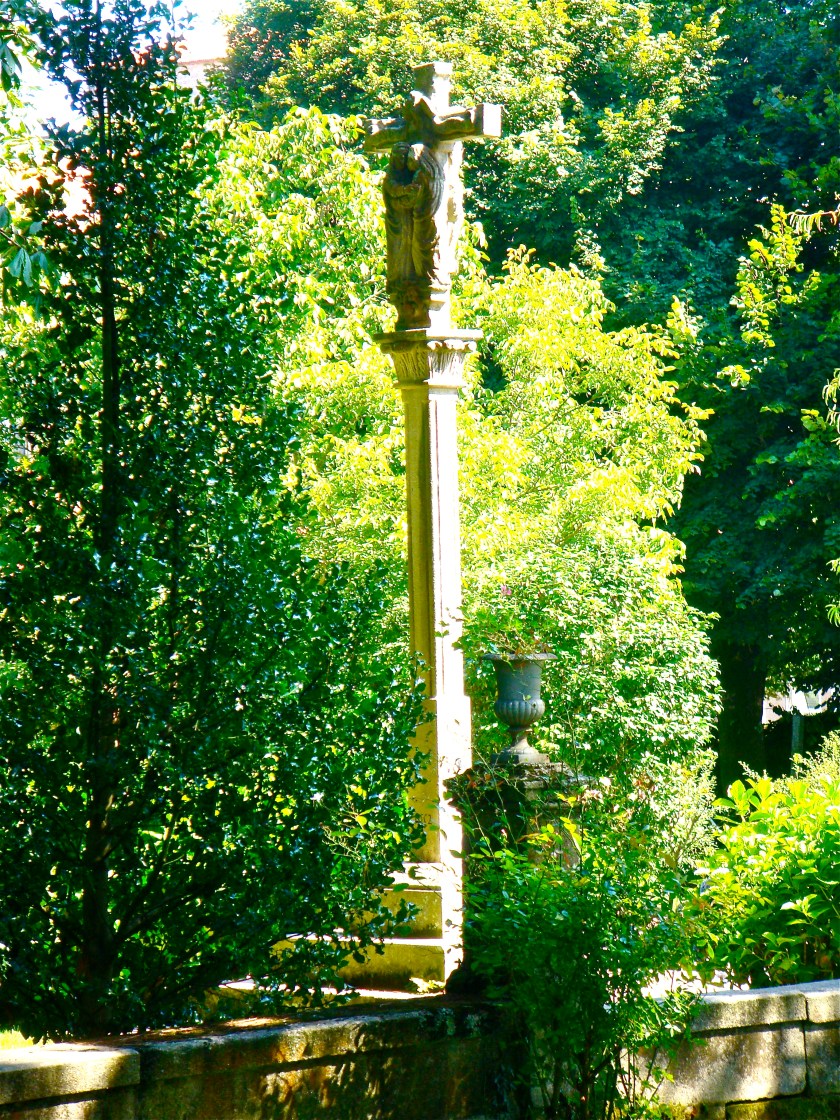
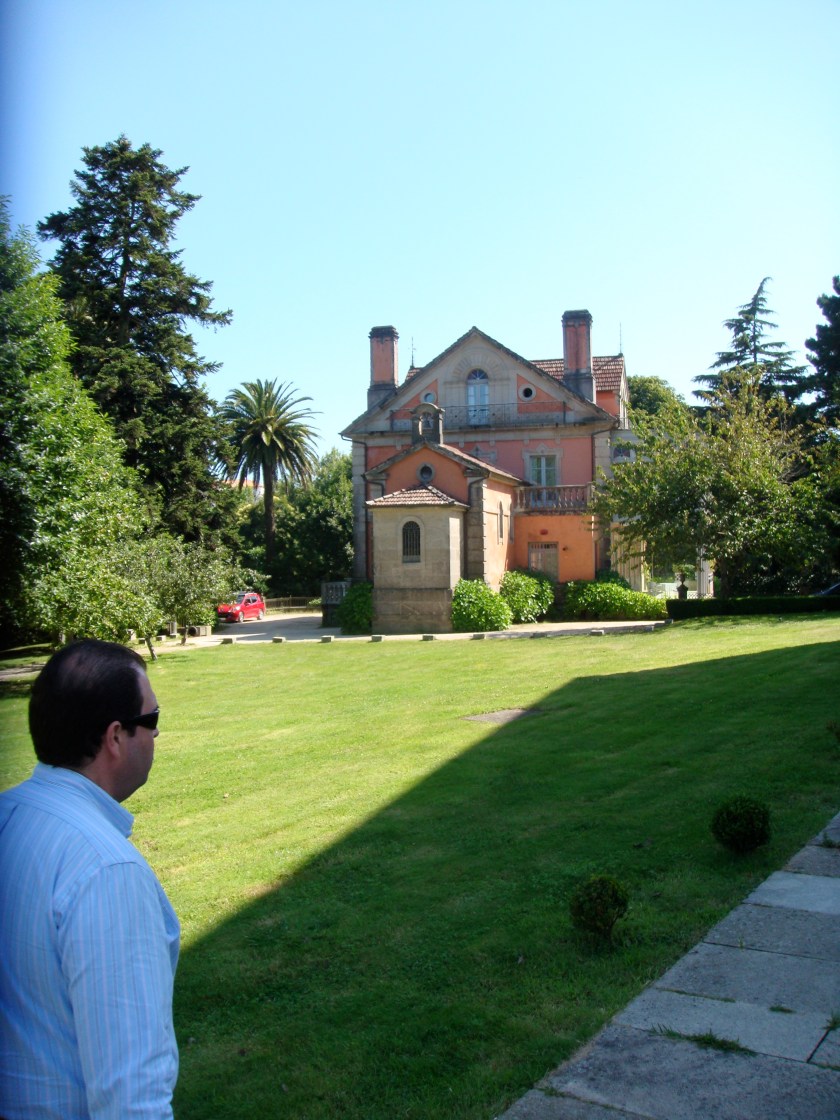
And, in the middle of this play of shadows, we were happy to find a symbol of what this city really meant: the coexistence of Present and Past; the never-ending rainbow of the constant Now, represented in two buildings hidden in the forest of this garden designed by one of the best architectures of Spain: Antón García-Abril, which work portrayed a new old vision in the use of stone, space and gravity… In order of apparence: SGAE Center of Galicia and The School of Grand Musical Studies of Galicia.

Sede de la SGAE en Galicia/ SGAE Center in Galicia.
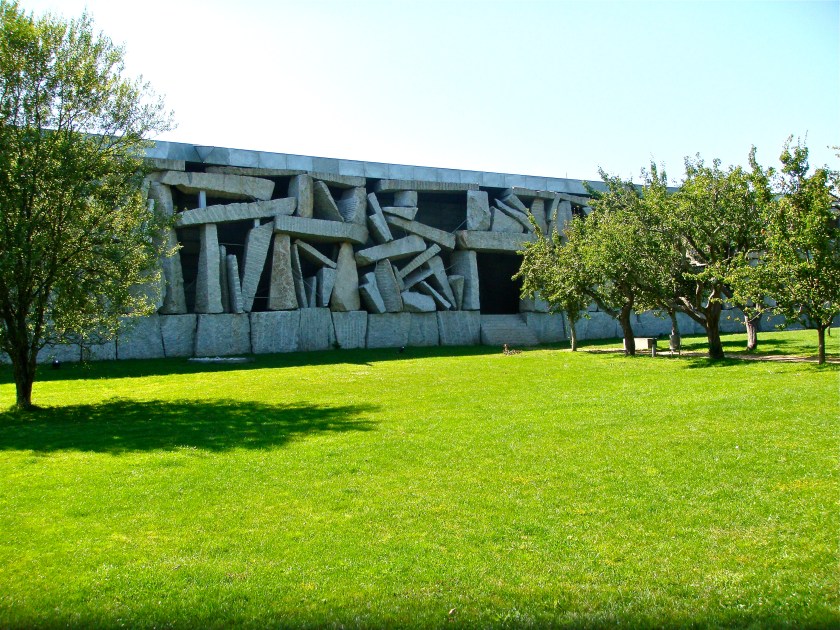

Centro de Altos Estudios Musicales de Galicia/ School of Grand Musical Studies of Galicia.
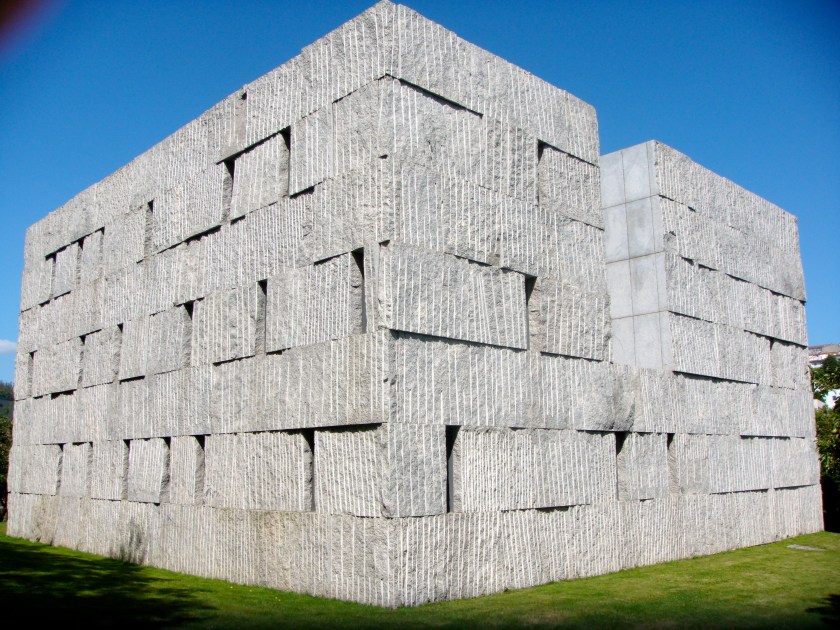
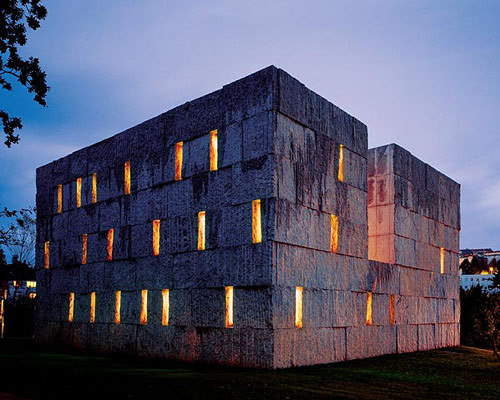
Antón García-Abril, arquitecto/ Antón García-Abril, architect.