¡Que largo es mi viaje y qué extenso es mi camino!
Salí en la carroza con el primer destello del alba y proseguí mi camino a través de los desiertos del mundo, dejando mi huella en numerosos planetas y estrellas.
El camino más largo es el que llega con mayor rapidez ante ti, y la enseñanza más complicada es la que se traduce en la sencillez de una melodía.
El viajero debe golpear en una y otra puerta extraña hasta poder llegar a la suya; y ha de marchar errante por todos los mundos externos, para alcanzar al fin su santuario más íntimo.
Mis ojos viajaron errantes durante mucho tiempo, antes de que los cerrara diciendo:»¡Aquí estás tú»
El grito que pregunta: «¿En dónde?», se funde en raudales de lágrimas e inunda al mundo con el torrente de ese: «¡Aquí estoy!»
Song 12.
The time that my journey takes is long and the way of it long.
I came out on the chariot of the first gleam of light, and pursued my voyages through the wilderness of worlds leaving my track on many a star and planet.
It is the most distant course that comes nearest to thyself, and that training is the most intricate which leads to the utter simplicity of a tune.
The traveler has to knock at every alien door to come to his own, and one has to wander through all the outer worlds to reach the innermost shrine at the end.
My eyes strayed far and wide before I shut them and said: ‘Here art thou!’
The question and the cry ‘Oh, where?’ melt into tears of a thousand streams and deluge the world with the flood of the assurance ‘I am!’
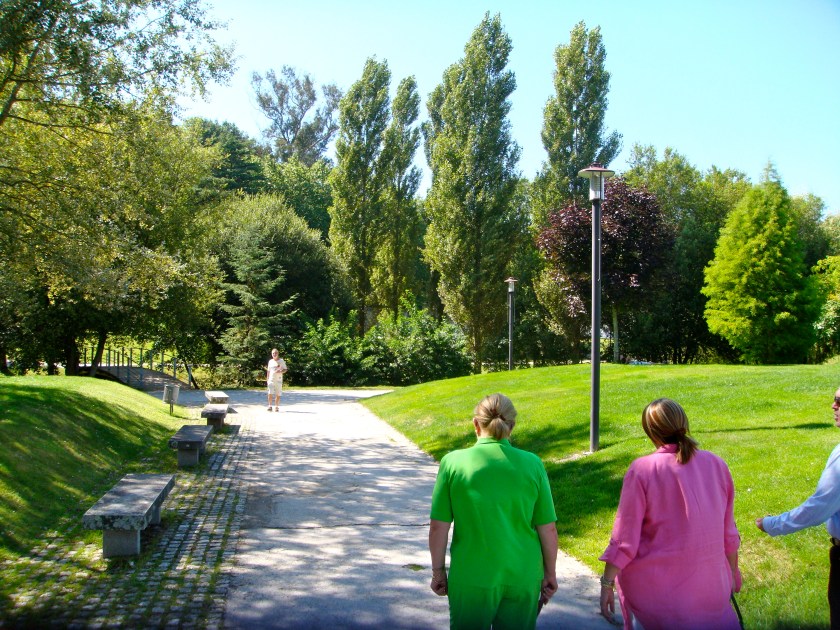
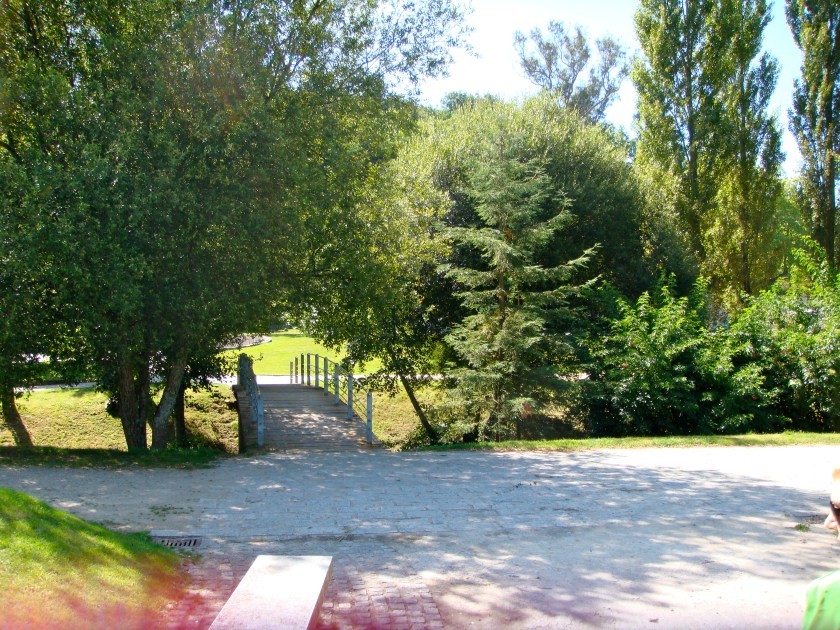
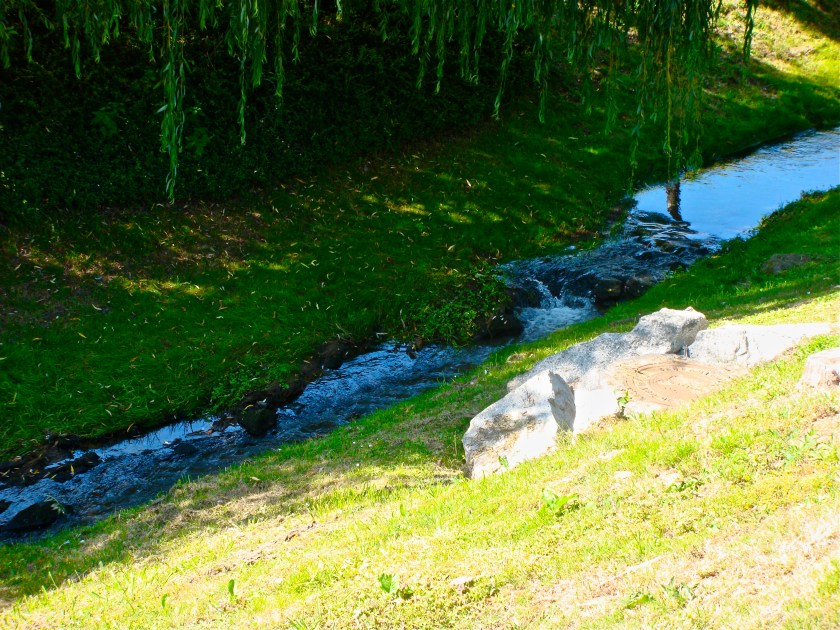
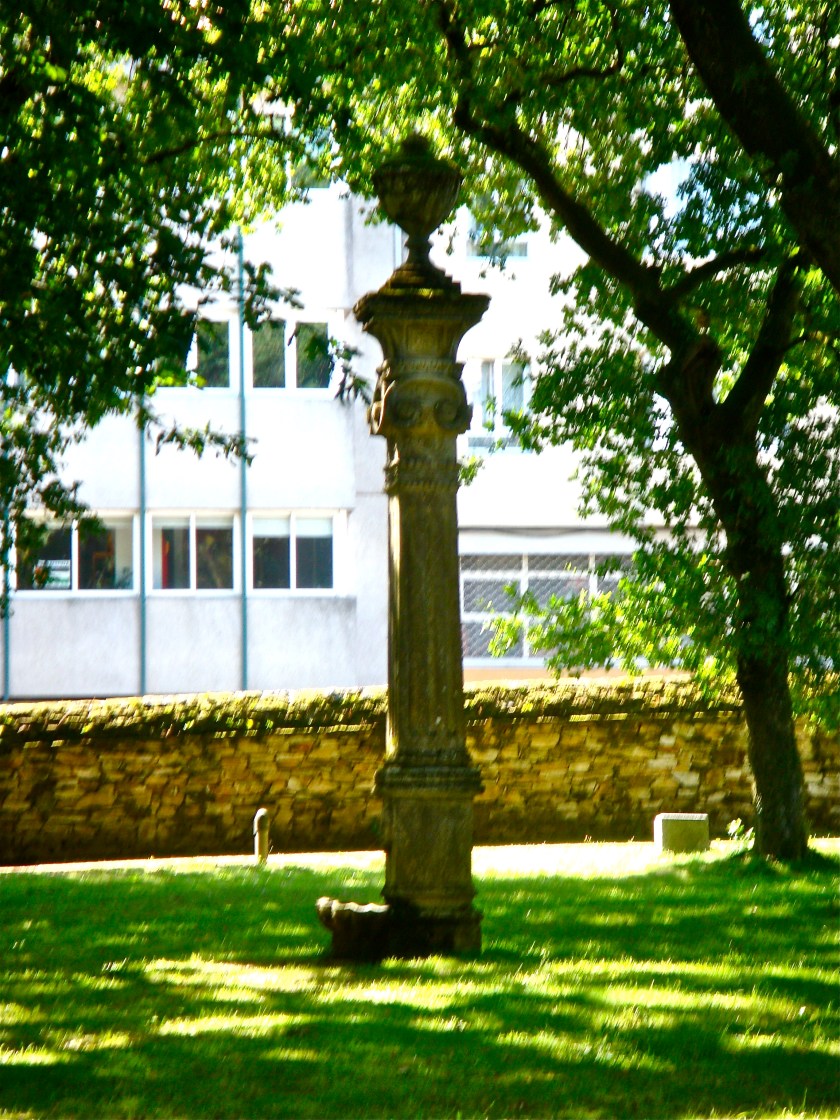
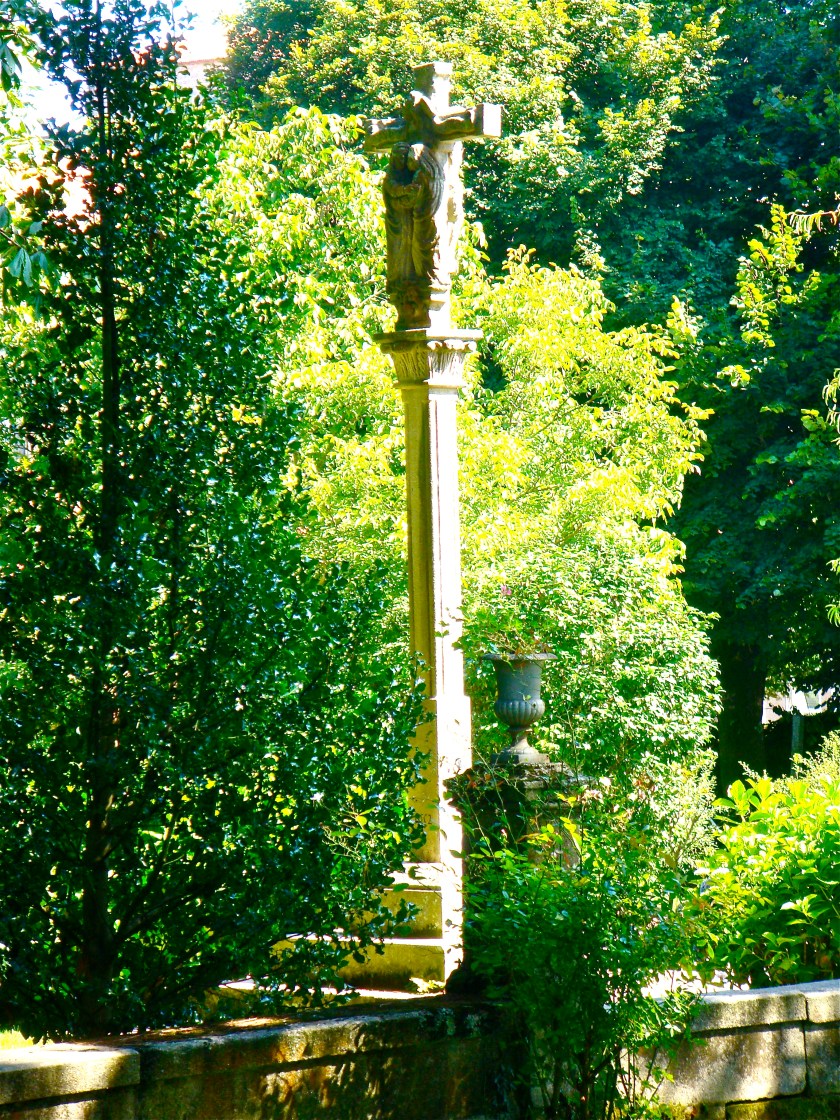
Paseando por Santiago de Compostela, entramos en un parque público amurallado, anteriormente el jardín de un viejo pazo abandonado, mientras la luz de la tarde entraba a raudales por los senderos restaurados a la vera del pequeño desvío del río, y el suave viento levantaba de la hierba recién cortada un sinnúmero de aromas entremezclados con la sombra de manzanos y perales, repletos de fruta colgada, y de pinos con sus agujas de terciopelo y de robles con sus ramas como abanicos.
Walking into Santiago de Compostela, we came into this public park, years ago the old garden of an old and ruin palace, rebuilt and opened up. We walked through it feeling the warmth of the afternoon, the smell of the recently cut grass and the rumour of the little river across the park; felt elevated while we were inside its walls, discovering the shadows of pines, oaks, apple-tress, pear-trees and other wonderful surprises.
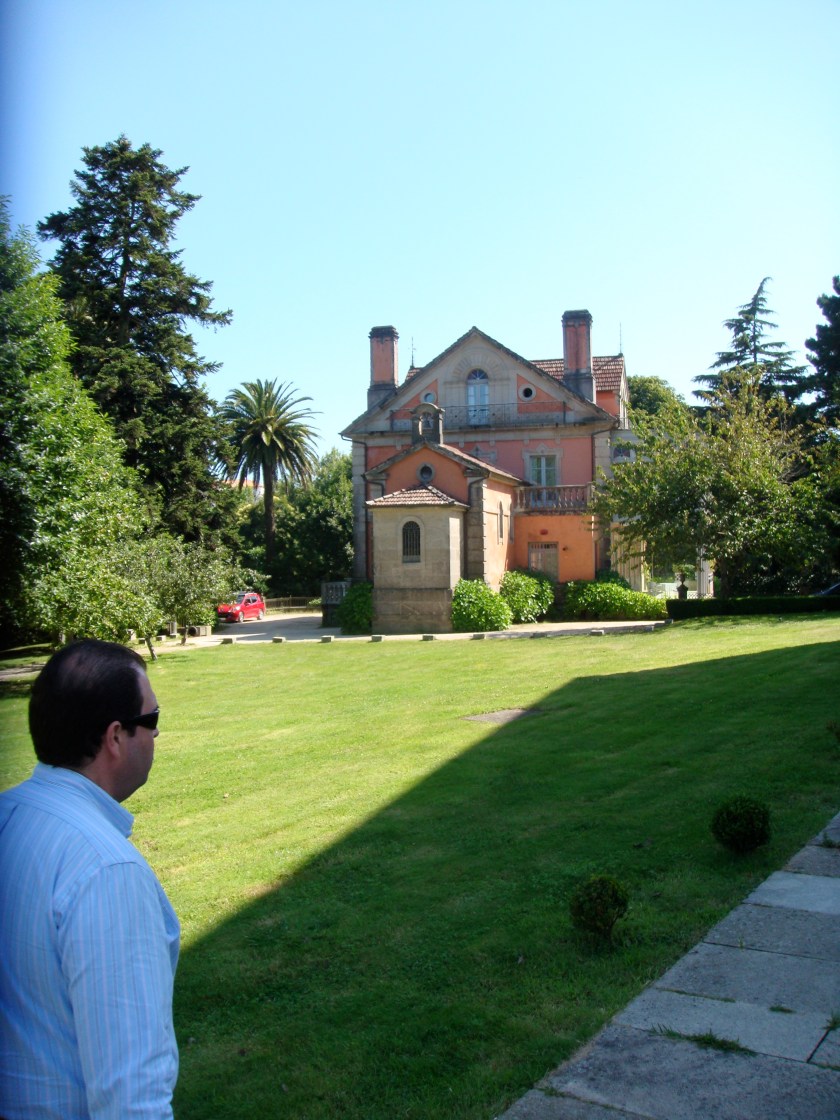
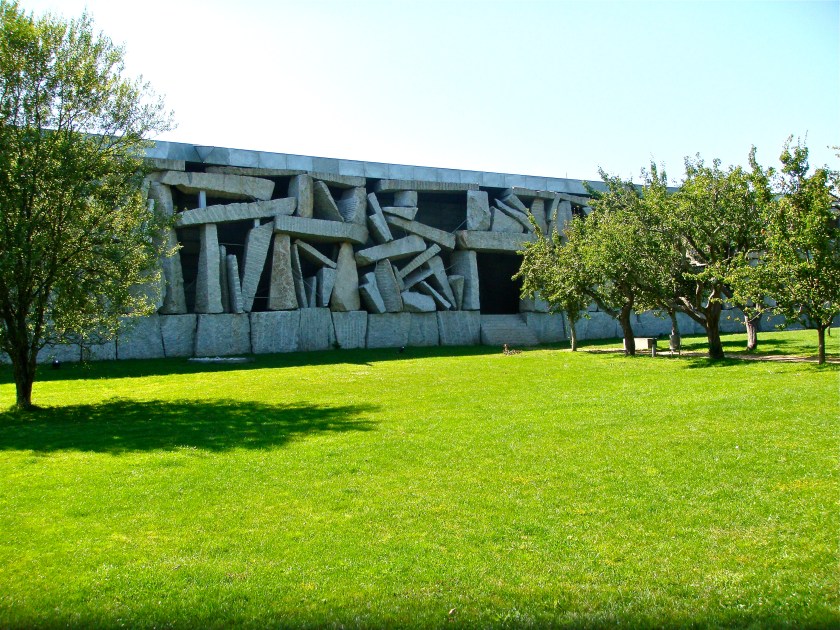
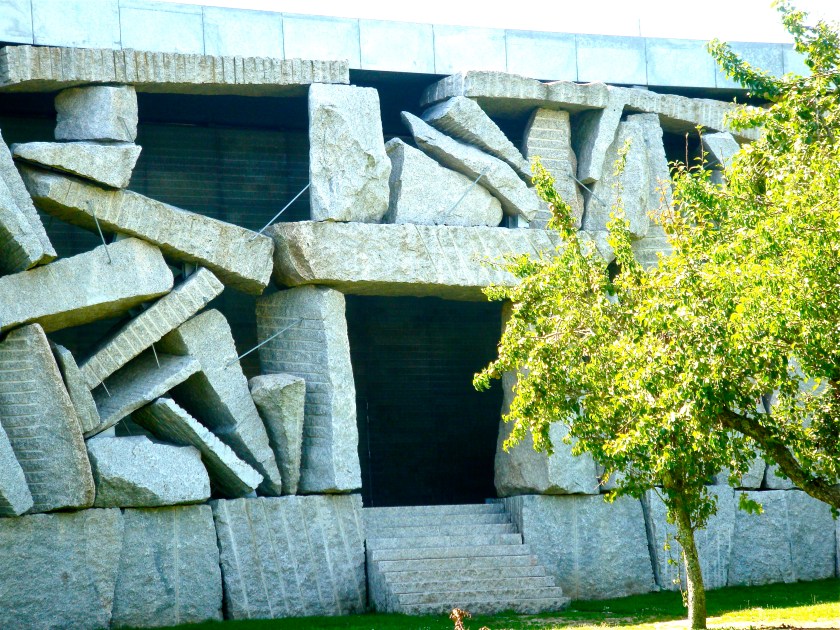
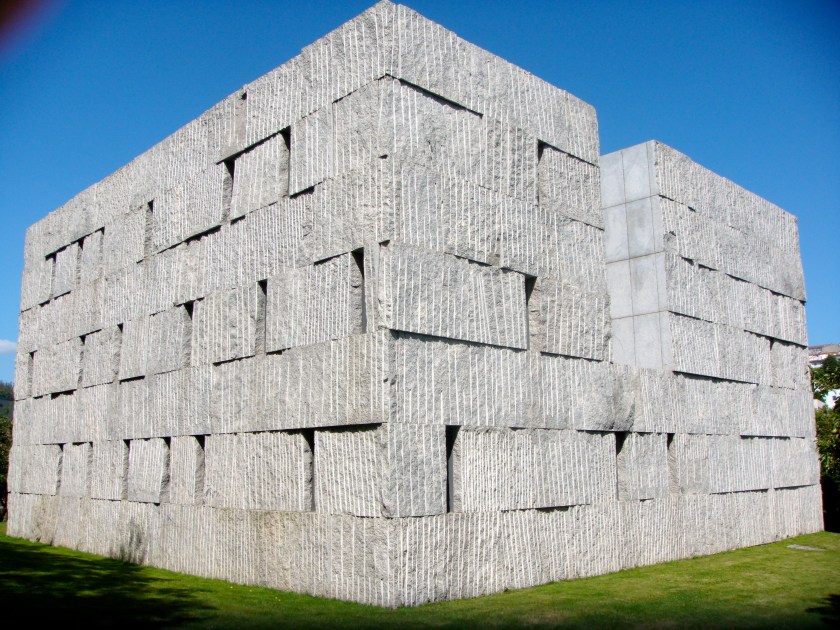
Y en medio de ese juego de sombras nos dimos cuenta, con especial agrado, que este sencillo parque, que volvía a nacer como campo de juegos, regazo para el descanso y oscuro núcleo para el amor, representa el espíritu de Santiago de Compostela: unir pasado y presente; ocupar en un mismo espacio el espacio comprendido entre las vidas humanas, y regalar, sin estridencias ni magnos eventos, algo tan hermoso al viandante ignorante y algo cansado de un día de verano, como es la obra deAntón García-Abril, que se alza en dos imponentes edificios que reflejan las características del diseño arquitectónico que lidera: empleo de granito puro, jugando con las formas únicas y rústicas, aunando gravedad con ligereza, umbrosidad con luminosidad y levedad con contundencia: la sede de la SGAE en Galicia y la Escuela de Altos Estudios Musicales de Galicia.
And, in the middle of this play of shadows, we were happy to find a symbol of what this city really meant: the coexistence of Present and Past; the never-ending rainbow of the constant Now, represented in two buildings hidden in the forest of this garden designed by one of the best architectures of Spain: Antón García-Abril, which work portrayed a new old vision in the use of stone, space and gravity… In order of apparence: SGAE Center of Galicia and The School of Grand Musical Studies of Galicia.
Sede de la SGAE en Galicia/ SGAE Center in Galicia.
Centro de Altos Estudios Musicales de Galicia/ School of Grand Musical Studies of Galicia.
Un amigo me recomendó que oyese a Teddy Thompson con especial vehemencia. Encontré esta versión de la canción de Leonard Cohen y supe al instante que tenía razón. Así que esta noche todo estará bien, al menos por un rato.
A friend introduced me to Teddy Thompson saying to me: «Just hear him!» Then, I found this version of Leonard Cohen’s and I knew my friend was right about him: I just love Teddy Thomposon. So, tonight will be fine, for a while.
Creo que pertenezco al género de los románticos. O al menos antes lo era. Ahora crece en mí más el cinismo del tiempo pasado, o advierto con mayor claridad la realidad diaria. Sin embargo, conservo en mi interior al menos una ligera brisa de lo que, antaño, era casi un huracán de sentimientos apasionados, graves e inocentes.
Hoy, revisando la biblioteca, aparte de darme cuenta de la ausencia de libros prestados un día y nunca más devueltos, reparé enMaurice. Y, al abrirlo, cayeron en mis manos algunos pétalos de rosa. Su contemplación hizo que mi mente, y mi entera realidad, viajase al día en que leí este hermoso libro, hace unos catorce años (la tradición romántica también procuraba reseñar el mes y el año en que estos hechos se producían.) Y el viento de mi juventud, los sentimientos sentidos, y el asombro de la belleza llegaron a mí de repente conforme revisaba las hojas de este librito.
Escrito en 1913 por E. M. Forster (1879-1970), y de publicación póstuma en 1971, la historia de Maurice y Clive, tortuosa, tierna y, finalmente, tan cínica como cualquier amor que una vez creímos real, seguía allí, tan verde, tan poderosa y tan entusiasta como siempre. Ese es el milagro de las buenas historias contadas con magistral encanto.
Maurice es una novela muy profunda, pero es en su aparente ligereza en donde se encuentra encerrada su magia. No es una historia fácil; quiero decir con esto que la historia de su protagonista, Maurice, es dura y tierna, tortuosa y, por sobre toda las cosas, con esa inasibilidad del destino, única y esperanzadora. Y Maurice es un gran libro, como fue una excelente película, porque, a pesar de los muchos pesares y desaires que Maurice sufre a lo largo de sus páginas, el destino cruel de aquellos que se atreven (o que simplemente son) distintos, sólo le lega una felicidad absoluta como el cielo despejado y el mar en calma. Maurice nos gusta porque puede ser cualquiera de nosotros, enfrentado al amor y al desamor, a la burguesa aventura del día a día, a la caída, y finalmente a la recuperación y, por qué no decirlo, al incierto camino de la felicidad. Y Alec, con su espíritu salvaje y tierno, tiene mucho que ver con ello.
Además, como muchas otras obras de E.M. Forster, es un magnífico y satírico retrato de la sociedad inglesa de la época; cuya desaparición, aún incompleta, estalla en sus últimos estertores en los días que vivimos… Y para todos aquellos que, como Maurice, se enfrentan a sus fantasmas y logran aceptarlos, su final brinda un sabio sosiego y una súbita esperanza, que se dibuja en una espléndida sonrisa cuando la última página del libro cierra su historia para siempre.
I think I was kind of a romantic guy. I used to keep rose petals into the pages of my favorites books, remarked the passages I loved most once or that given to me so much to think or to feel about them. I must admit today I’m more cynical than I never was, but this little fellow I was is hidding beneath the butch guy I’m trying to be today, and sometimes, when he caught this big guy off guard, the most romantic and sentimental side of me floats over me and captures myself completely.
Maurice is that kind of book (and movie). Maurice and Clive’s story, with its ups and downs, romantic and resentful, unconstant and far away from exceptional, but unique and tender, makes Maurice a touching, deep and beautiful book. Written by E. M. Forster in 1913, and edited after the death of the author in 1971, exhalates this breeze of modernity that keeps alive the beat of Maurice’s story and keeps alive its flame.
It’s not an easy story. Reflects the anguish; the fragile happiness; the deep deception and the joy of a man through his early life; and his constant fight, first against himself and, after he found true love and he savoured it, his battle against the society’s rules he is living at. Anyone that has to lived this kind of conflict, this kind of battle against the difference (gender, skin color, tastes, way of living) could find into its pages the torture and the anguish but, as well, the joy and the true beauty of freedom once Maurice met the real love and was prepared to face the world for it.
Plus, as many other E.M. Forster’s books, Maurice is a protrayed living memory of a time and a social conventions that, nearly to an end in our days, still have some kind of inffluence in our society. And it allows us to understand better from where we are now and to where we can head to, if we are capable to destroy the last barriers that try to keep Humankind in the tramps of these old fashion and restrictive social laws that have non sense in today’s world.

 Song 12.





 Tiempo de Curar/ Healing Time